EAS Security
 EAS Gate
 Security Tag
 EAS Accessories
 Gadgets
 Convex Mirror
 Road Barrier
 Burglar Alarm
 Calling System
Who Works Which Shift? Managing Department Assignments with eHajira
November 06, 2026
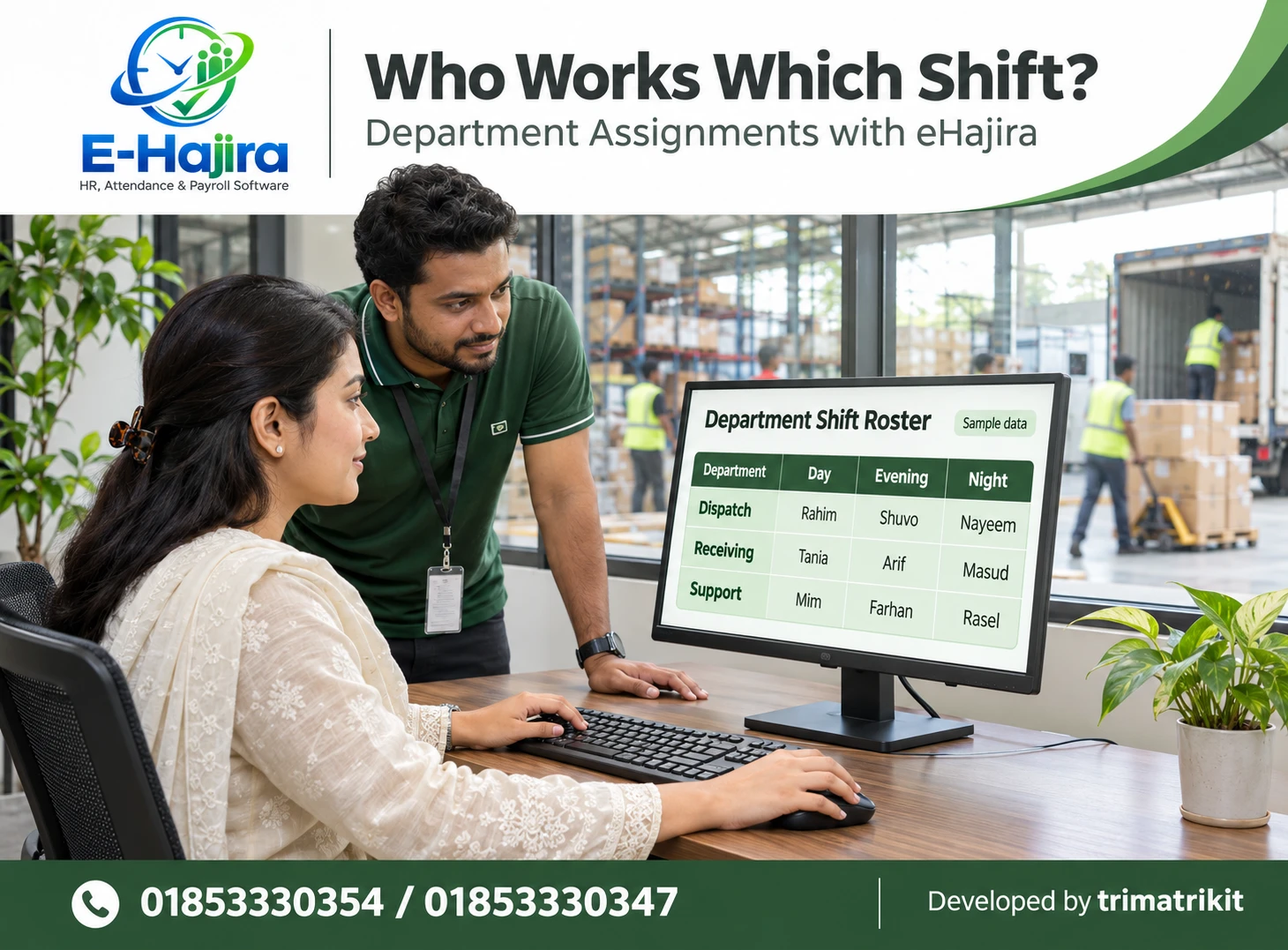
Who Works Which Shift? Managing Department Assignments with eHajira
A department manager prepares next week’s schedule, an employee receives approval for leave, and another employee temporarily moves to a different branch. Each decision may be reasonable on its own. However, if the information is not coordinated, the final roster can leave an important duty uncovered.
Department-wise shift assignment brings these decisions together. It establishes which employees are expected to work, when they should work, which department they will support, and who is responsible for reviewing changes.
For businesses in Bangladesh, this matters wherever working hours vary between teams. A showroom may need separate opening and closing teams. A factory may organize production and maintenance around different operating periods. A service business may require evening support while its accounts department follows regular office hours.
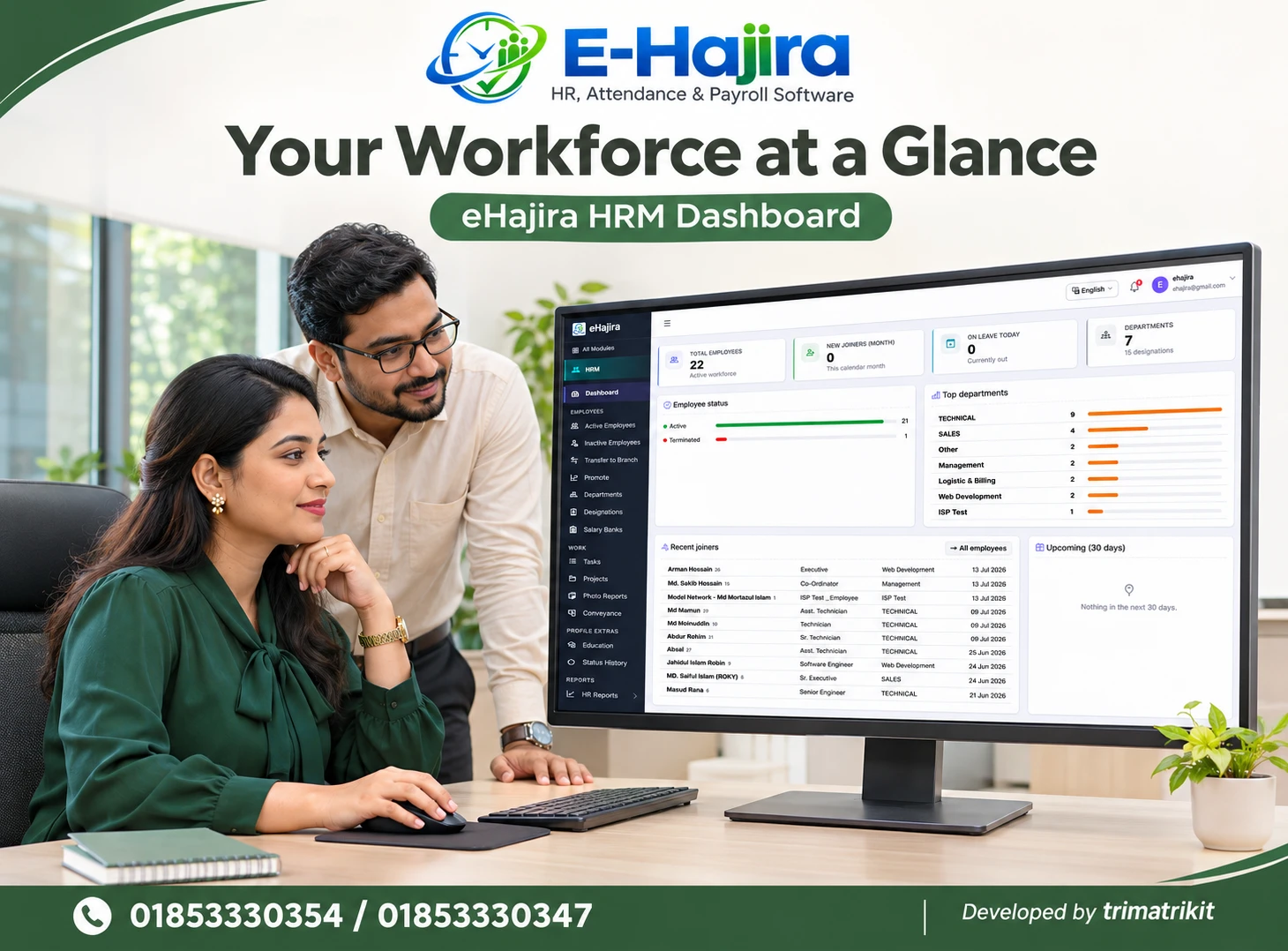
eHajira provides a platform for organizing employee, attendance, and scheduling information. This guide explains a practical approach to department assignments, including preparation, communication, changes, attendance review, and payroll handover.
What Is Department-Wise Shift Assignment?
Department-wise shift assignment is the process of allocating employees to defined working periods within an organizational department.
A shift describes the working period. A department identifies the organizational team. An assignment connects a particular employee to that department’s work for a specific date or period.
These details should remain distinguishable. An employee may belong permanently to customer service but temporarily support dispatch for one evening. Changing the employee’s permanent department may be unnecessary if the arrangement is only a short assignment.
A useful process therefore records both the employee’s organizational position and the duty they are expected to perform. This helps managers understand staffing without confusing temporary coverage with a permanent transfer.
How eHajira Fits into Shift Planning
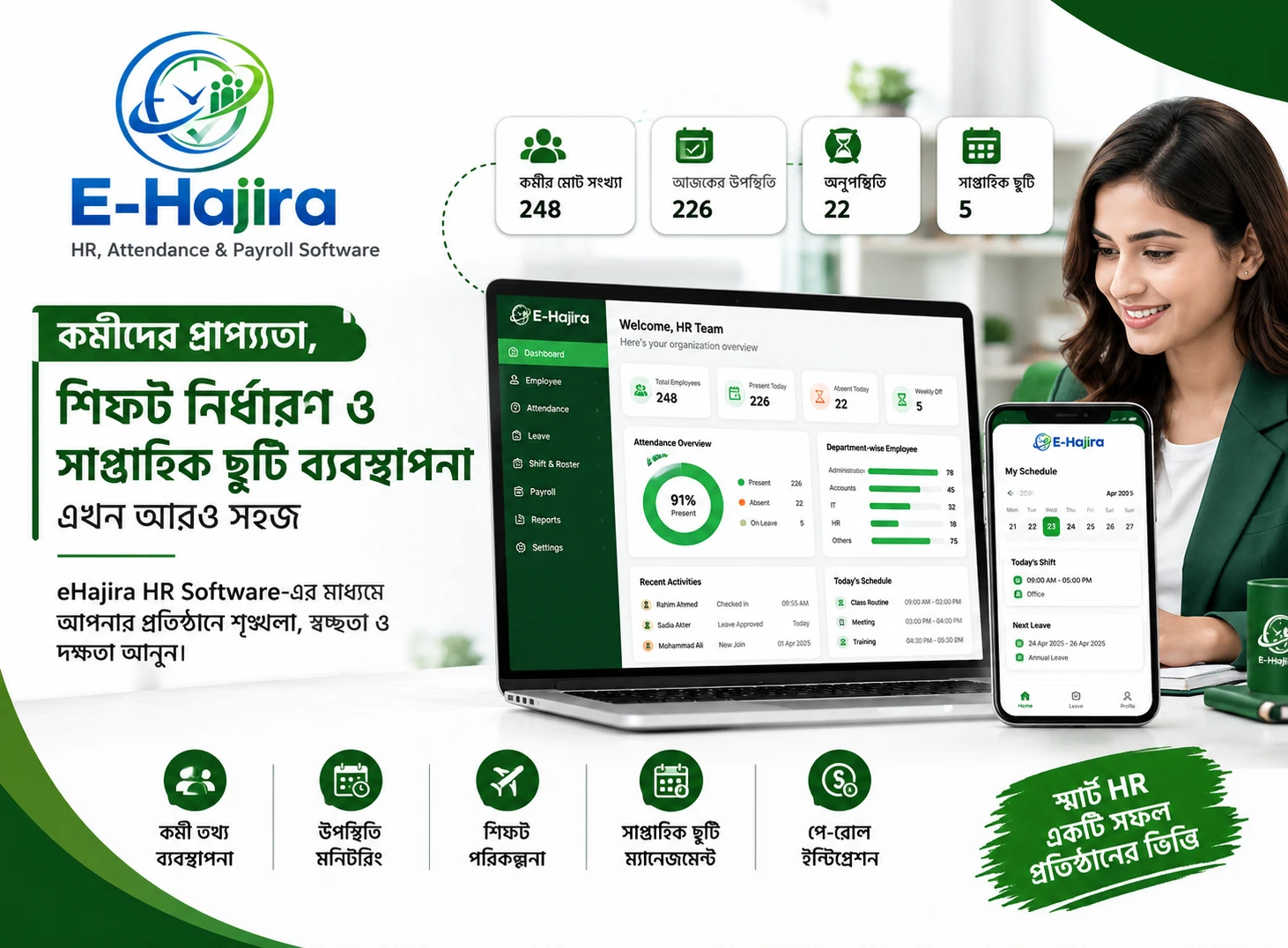
The developer’s published eHajira roster guide describes employee shift assignment connected with attendance and payroll administration. It identifies day, night, and rotational scheduling in relevant configurations, while explaining that availability depends on the selected package and implementation scope.
Businesses should evaluate these capabilities using their own working arrangements. A demonstration should show an actual department, its employees, a scheduling period, and a realistic change.
The practical recommendations in this article are planning methods. Advanced controls, such as automatic conflict warnings, roster locking, or particular approval restrictions, should be demonstrated before an institution treats them as included features.
Why Clear Assignments Matter in Bangladesh Workplaces
Different departments often experience different workloads during the same day.
For example, a hypothetical distribution business in Dhaka may receive goods in the morning and prepare deliveries later in the afternoon. Its receiving team and dispatch team could therefore need different staffing patterns.
If management applies one schedule to everyone, it may overlook those differences. Conversely, if every department maintains a separate schedule without coordination, shared employees may receive overlapping instructions.
A department-based approach creates a clearer relationship between workload and assignments. The aim is to give managers reliable information for decisions, rather than assume that a published roster automatically guarantees sufficient staffing.
Start with Accurate Employee and Department Records
Before preparing schedules, review the employee information behind them.
Each employee should have a consistent identifier, current department, branch, reporting relationship, and employment status. Duplicate profiles or outdated assignments can make a roster appear complete when the underlying information is wrong.
Employees who have transferred, left the organization, or changed responsibilities need particular attention. A former department should not continue relying on someone who is no longer available to it.
eHajira’s published product information describes department-based organization and reporting. Businesses should verify how employee assignments and department filters operate in their chosen configuration before importing or reorganizing records.
Describe the Work Before Counting Employees
A department’s staffing requirement should begin with the duties that must be covered.
Two available employees are not always interchangeable. One may be trained to operate specific equipment, while another may handle documentation or customer communication.
Managers should identify essential responsibilities for each working period and determine which employees can perform them. These planning details may need supporting records if the selected software does not contain a dedicated skills function.
Headcount remains useful, but it should be considered alongside role coverage. A shift containing enough people can still have an operational gap if a necessary responsibility has no suitable owner.
Define Shift Names and Times Consistently
Shift labels should help employees understand their duties.
Names such as “Morning,” “Evening,” and “Night” can become confusing if different departments use them for different hours. A clearer naming convention can include a department reference or an easily understood time description.
The underlying configuration should identify the intended start and end, relevant breaks, and how the working period relates to the operating calendar.
Managers should also distinguish a shift definition from an employee assignment. Updating a reusable shift may affect several people, while changing one employee’s duty should have a narrower purpose. Test the effect of each type of change before routine use.
Match the Planning Period to Operational Needs
Some departments can prepare schedules several weeks ahead. Others need shorter planning periods because demand changes frequently.
The organization should choose a planning period that provides employees with useful notice while allowing managers to respond to operational requirements.
A weekly roster may suit one team, while another uses a longer rotation with occasional approved adjustments. The important point is that everyone understands which period is confirmed and which remains provisional.
Avoid treating an unfinished draft as an employee instruction. Whether publication is managed within eHajira or through an approved communication process, the status of the schedule should be clear.
Check Availability Before Finalizing Assignments
An employee can appear available in a roster while having approved leave, training, or another confirmed duty.
Department managers should review relevant commitments before finalizing assignments. Where information comes from separate processes, responsibility for reconciling it must be explicit.
Pending leave also requires careful treatment. It is different from approved leave, but it may indicate a staffing issue that deserves early discussion.
The purpose is to avoid discovering preventable conflicts after the schedule has been communicated. If the selected eHajira setup provides connected views or warnings, test them using realistic examples rather than assuming that every conflict will be detected automatically.
Distinguish Temporary Coverage from Permanent Transfers
Temporary support arrangements need an effective date and a clear end.
Suppose an employee from one branch helps another department for three days. The receiving manager needs to know the duties assigned, while the original manager needs to know when the employee will return.
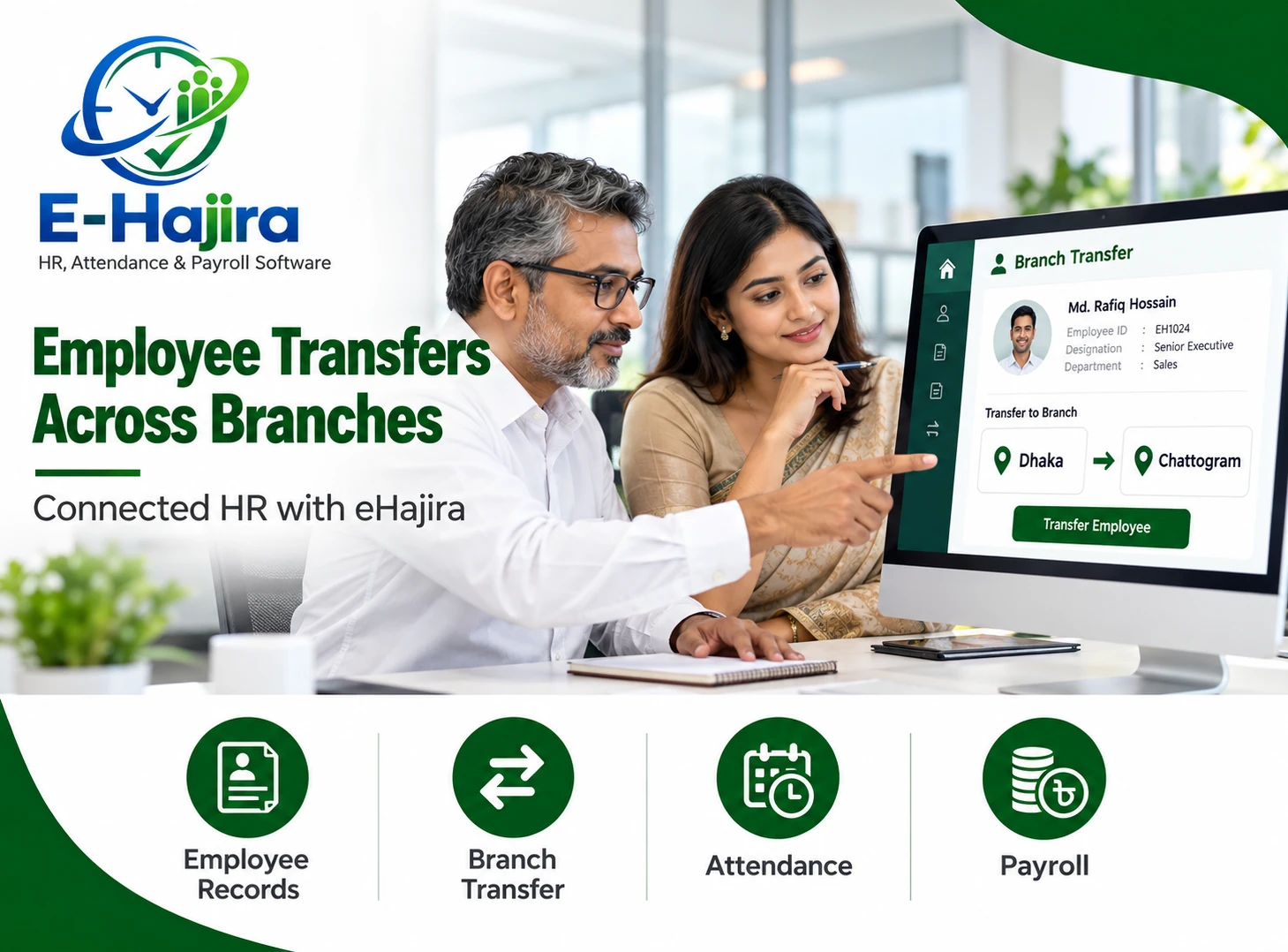
A permanent transfer has different implications for reporting relationships and employee records. Mixing the two can distort later attendance or departmental analysis.
During implementation, demonstrate both scenarios. Confirm how eHajira represents the employee’s current organization and the historical context of earlier duties. Where a particular distinction is unavailable, establish a documented supporting process.
Establish Ownership of the Roster
A reliable roster needs someone responsible for its accuracy.
Department managers are well placed to explain operational requirements. HR can maintain common procedures and employee information. A designated administrator may manage configuration and access.
The organization should decide who prepares assignments, who reviews them, and who communicates the approved version. A small business may combine these responsibilities, but they should still be understood.
Employees also need a clear route for reporting mistakes. If everyone assumes another person will update the schedule, informal changes can remain outside the record until attendance or payroll questions arise.
Communicate Assignments Clearly to Employees
A correct roster is useful only when employees can understand and access it.
The message should identify the employee, department, location, date, and working period. If a duty differs from the usual arrangement, that change should be prominent.
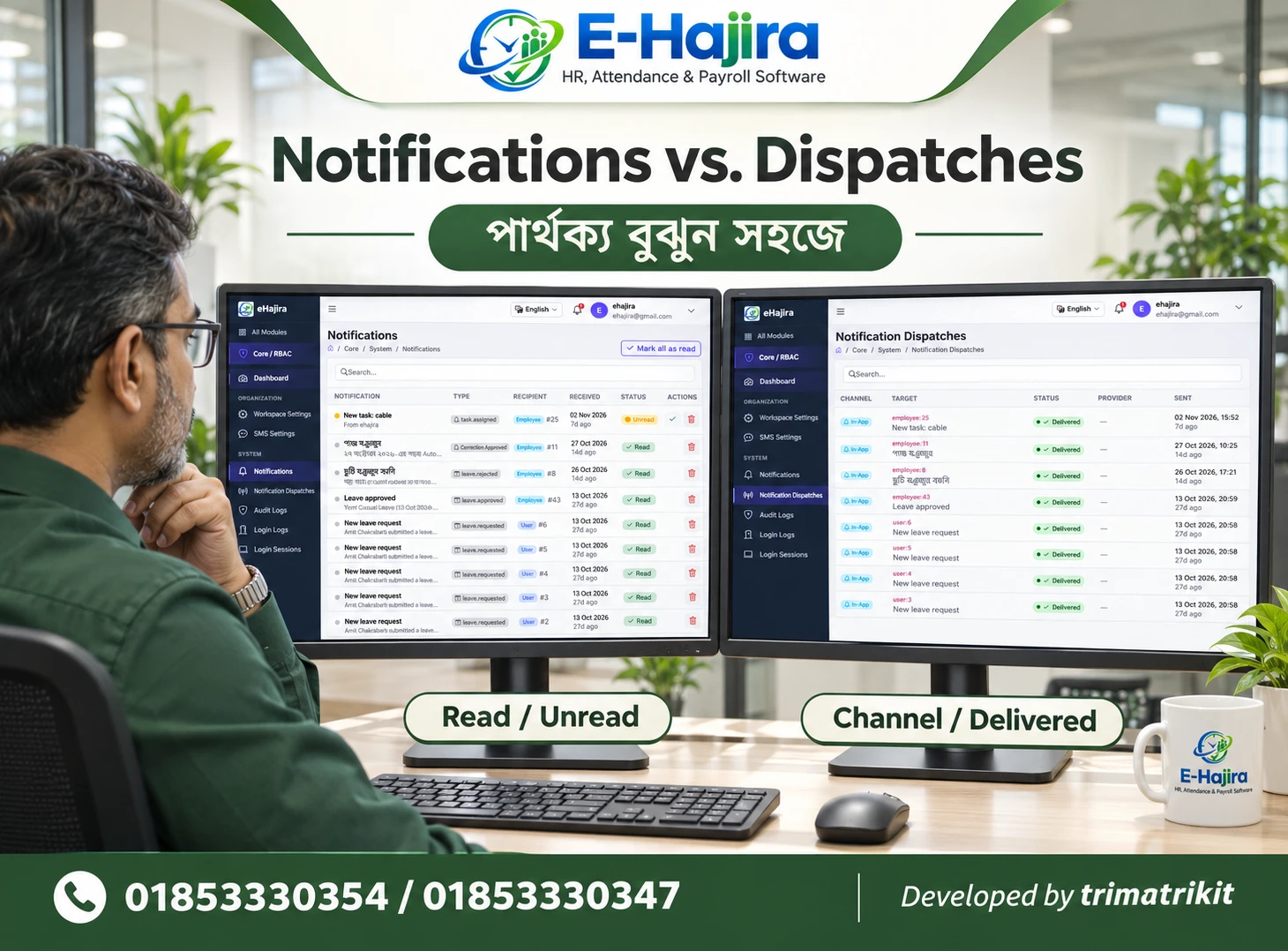
Use the communication channels available in the organization’s eHajira deployment and approved workplace process. Employee self-service access, notifications, or specific message delivery options should be confirmed separately.
For employees who need instructions in Bangla, provide an understandable explanation. The responsibility is to communicate the assignment clearly, rather than assume that publishing an English schedule ensures every employee has understood it.
Manage Shift Changes through a Consistent Process
Changes may be necessary after publication, but they should remain traceable.
A useful change request explains the affected date, original assignment, proposed arrangement, and operational reason. The reviewer should consider the impact on both the employee and the department.
An employee swap also requires checking the replacement’s suitability. Exchanging names is insufficient if the two roles require different training or responsibilities.
After approval, update the authoritative schedule and inform everyone affected. The organization should establish how older versions are identified so employees do not continue following an outdated screenshot or printed copy.
Plan Handover Responsibilities
Coverage is about continuity as well as employee numbers.
Where one team takes over from another, managers should identify what needs to be handed over. This could include unfinished work, equipment issues, customer commitments, or pending deliveries.
A roster can identify who is expected to be on duty, but it does not establish that the handover happened successfully. Departments may need a separate operational record for that purpose.
Managers should therefore connect shift planning with their actual handover process. Any required overlap should be planned deliberately and reviewed under the organization’s applicable working arrangements.
Review Attendance Against the Correct Assignment
Once the shift has taken place, compare actual attendance with the assignment that applied on that date.
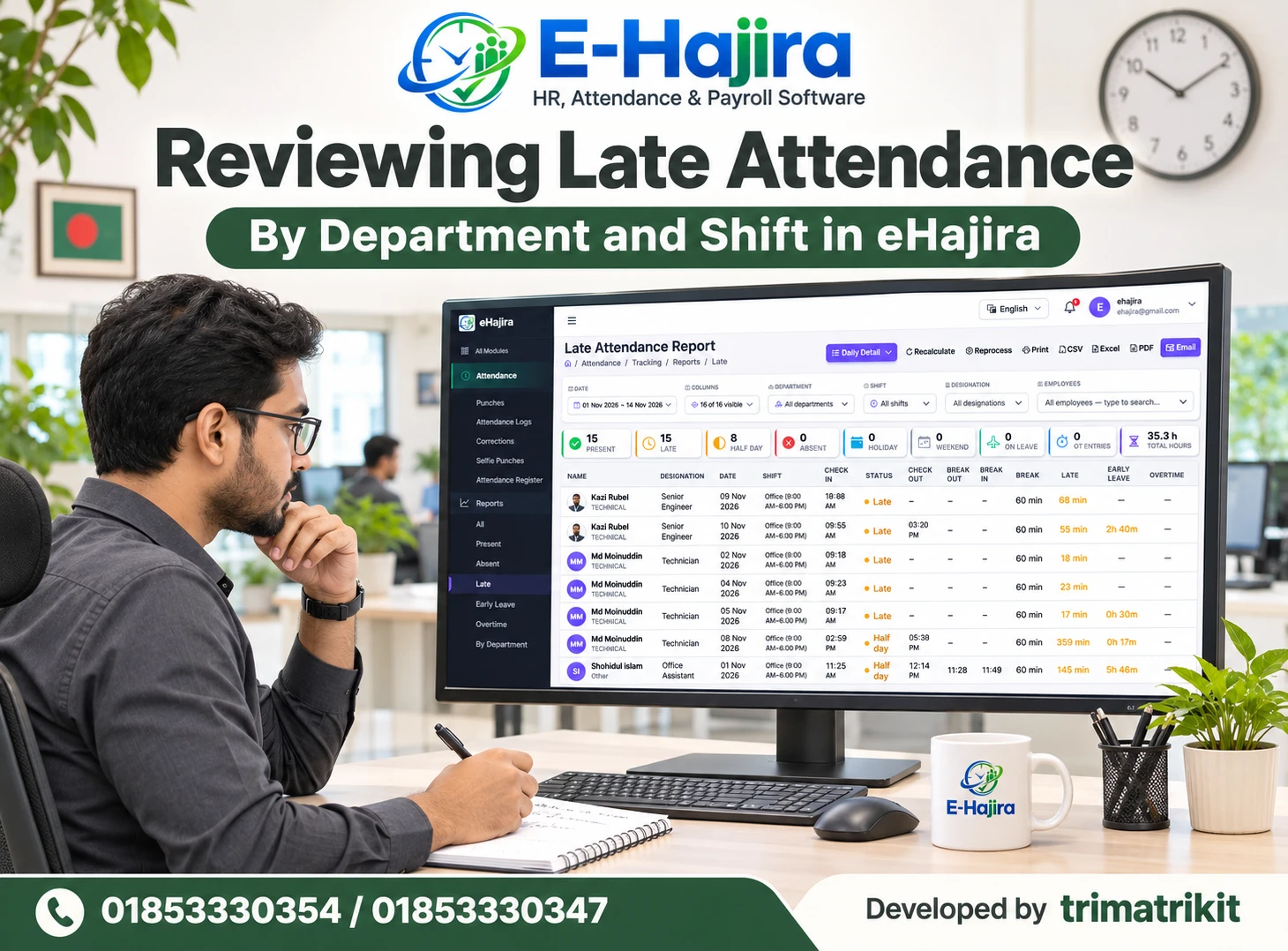
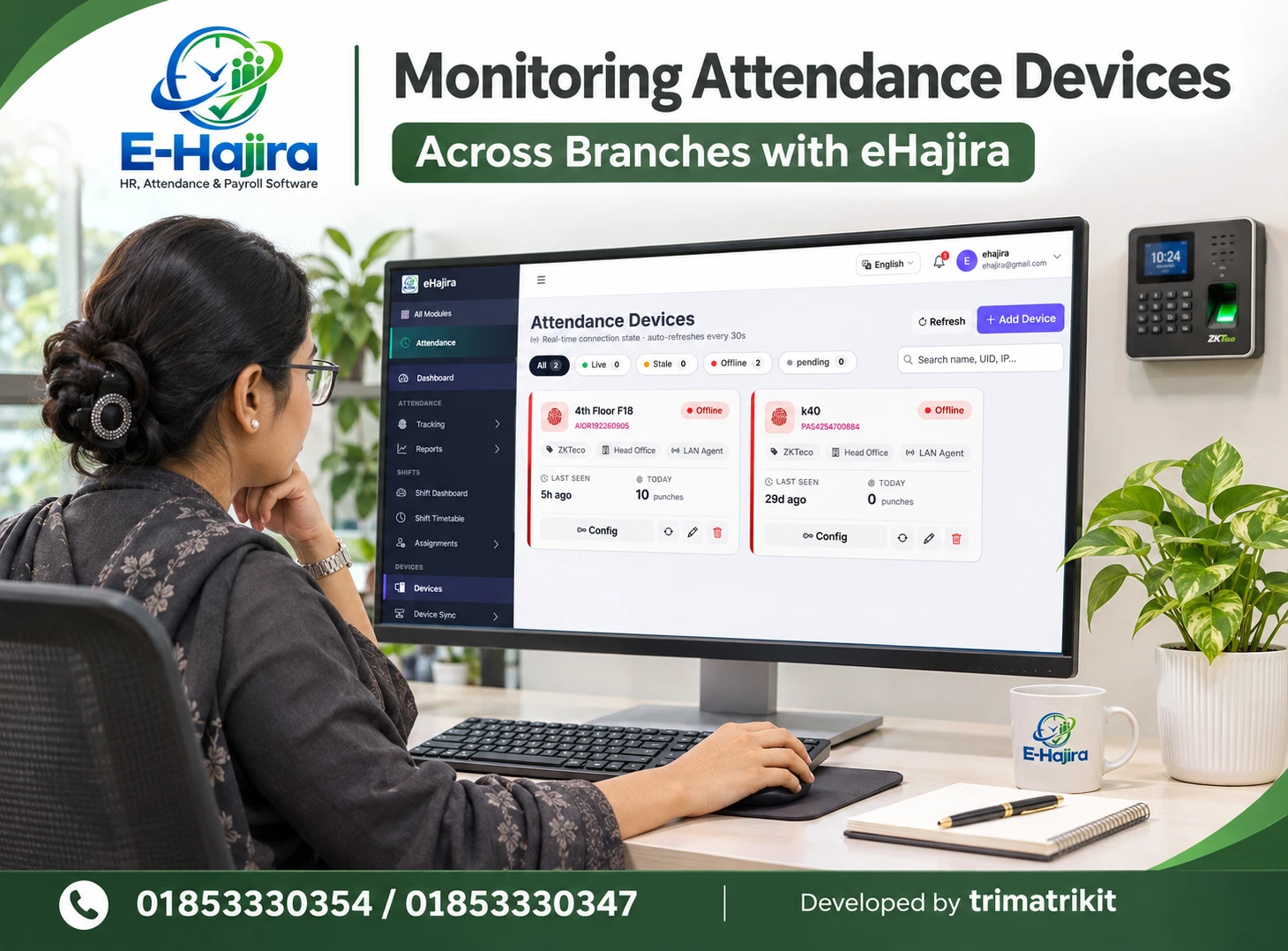
If an employee received approval to start later, reviewing their punch against the original start time can create an incorrect exception. Similarly, a branch change may explain why a record appears on an unexpected device.
Investigate missing punches and other discrepancies before drawing conclusions about attendance.
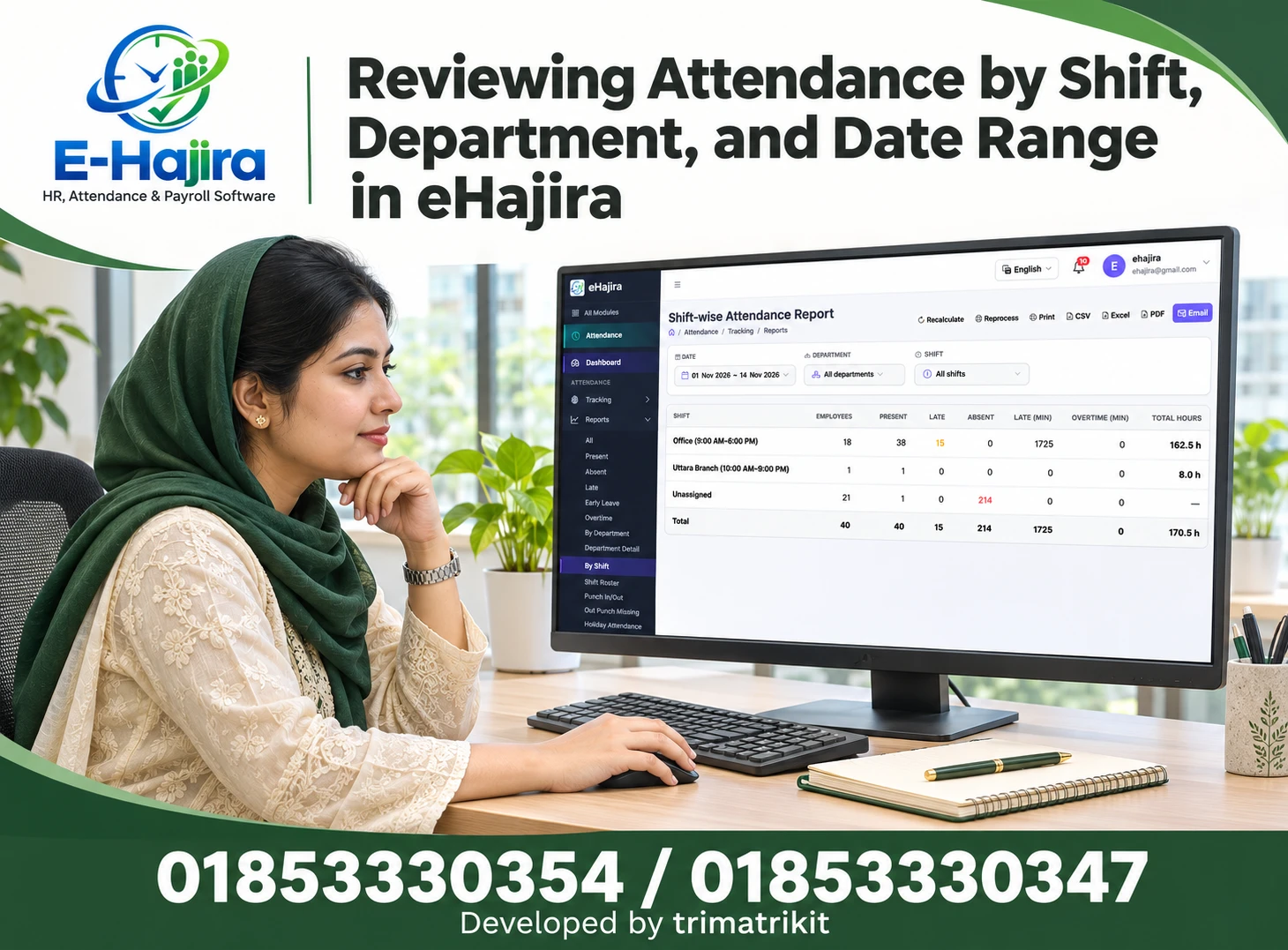
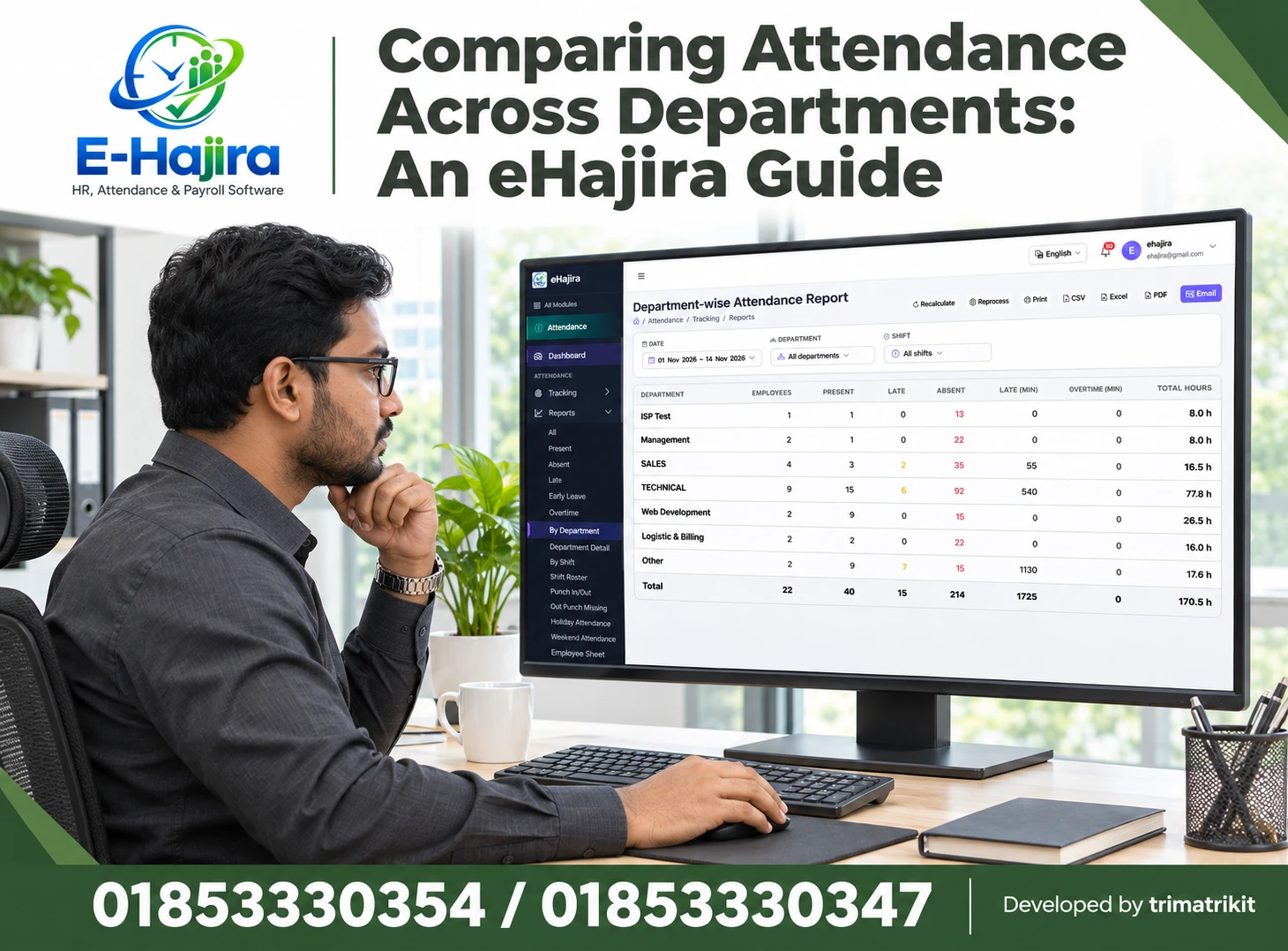
eHajira’s published product description includes reporting by department and shift. Organizations should confirm which filters and outputs are available, and test whether they reflect the correct assignments for the reporting period.
Treat Overnight Duties as Complete Working Periods
An overnight shift can begin on one date and finish on the next.
For planning and attendance review, the organization needs a consistent method for identifying that working period. Looking only at one calendar date may make an otherwise complete record appear incomplete.
Test an overnight example during implementation. Confirm how the assignment, punches, breaks, and resulting attendance appear.
This is especially useful when an employee changes between day and night duties. Managers should review the complete sequence and relevant working arrangements, rather than assess each isolated date without considering the surrounding schedule.
Keep Planned Staffing Separate from Payroll Inputs
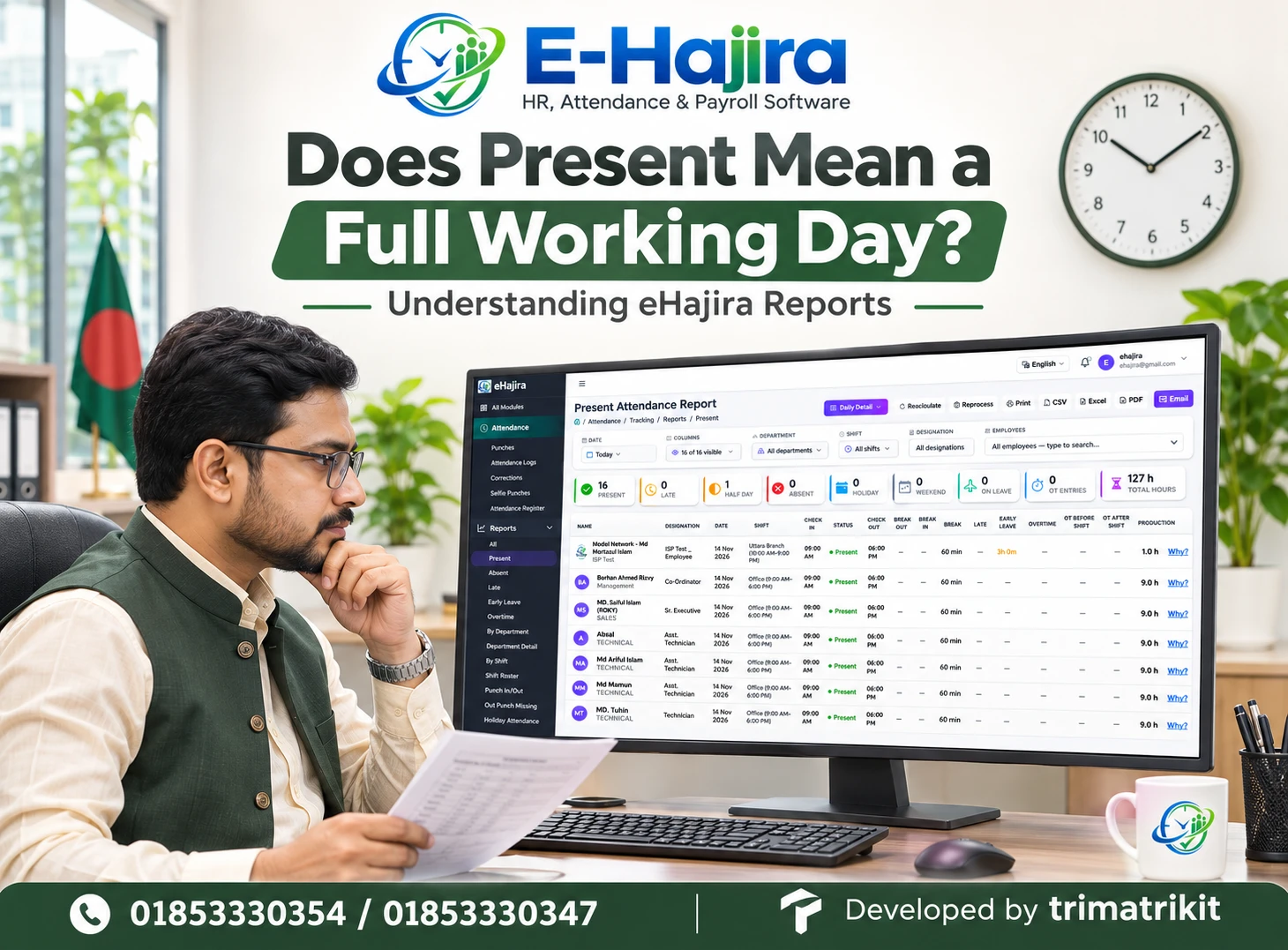
A roster records an expectation. It does not prove that the employee worked every scheduled hour.
Payroll preparation needs verified attendance and any approved adjustments relevant to the employee. Additional working time may also require separate review under the applicable process.
For example, assigning someone to replace an absent colleague does not by itself determine the final payment. The actual work record and relevant salary rules still need assessment.
The planning team should therefore provide clear assignment information, while HR and payroll reconcile it with verified outcomes. This separation helps prevent assumptions from becoming unexplained salary inputs.
A Practical Department Assignment Example
Consider a hypothetical wholesale business with receiving, sales support, and dispatch departments.
The dispatch manager expects a busy Thursday afternoon. One experienced dispatch employee already has approved leave, so the manager proposes temporary support from receiving.
Before confirming the change, management checks whether receiving can release the employee and whether that person is suitable for the dispatch duties. The assignment is then recorded for the specific date and communicated to both managers.
After the shift, HR reviews the attendance against that approved arrangement. Any missing punch is resolved through the correction process. Payroll receives verified information, while the temporary assignment remains distinguishable from a permanent transfer.
Protect Access and Historical Information
Department managers may need access to their teams’ schedules without needing unrestricted access to unrelated employee information.
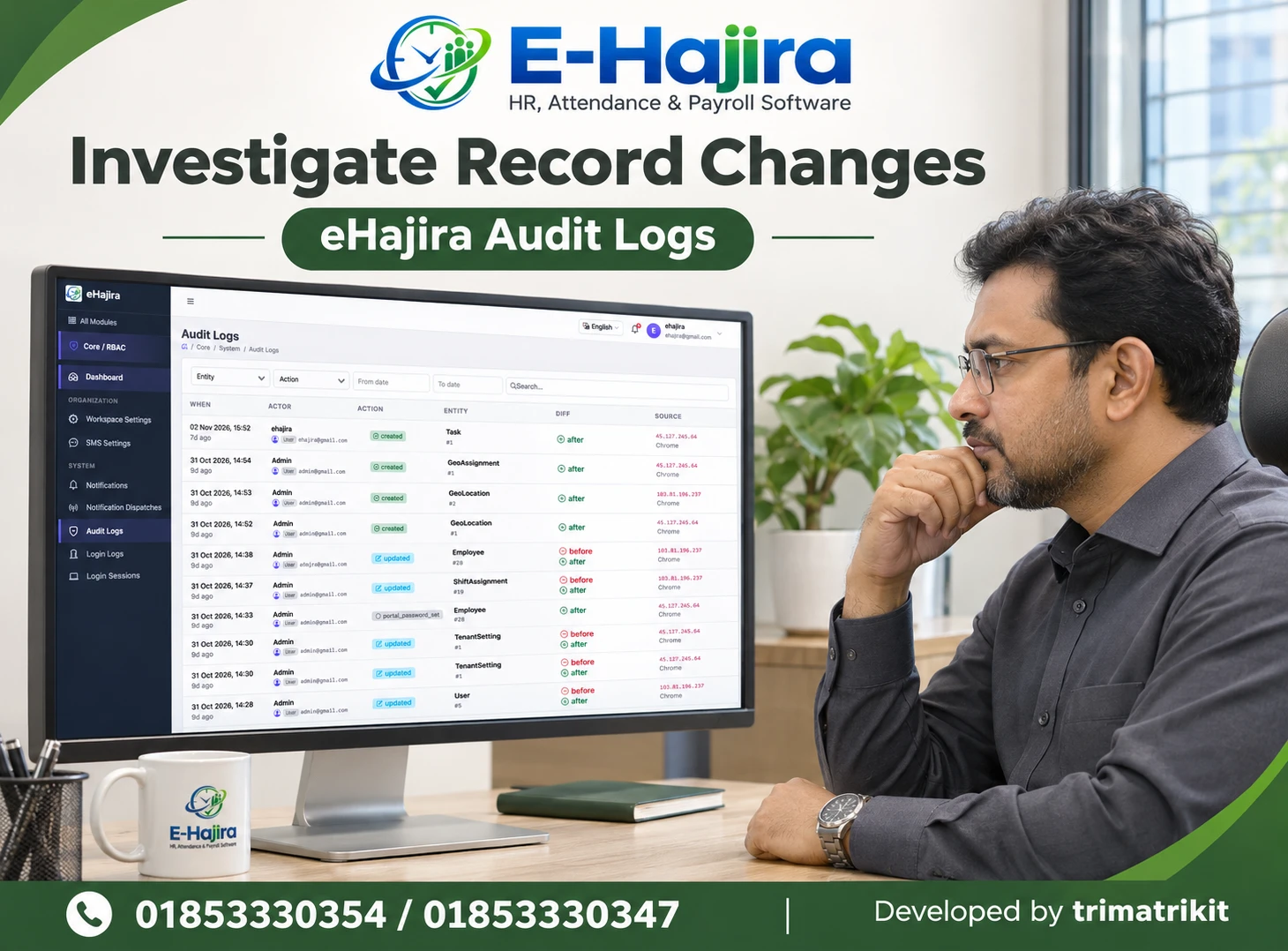
Review who can view, create, change, approve, or export assignments. Confirm how these permissions work in the selected deployment.
Historical records also matter. When an employee changes department, a previous month’s review should retain enough context to explain the duties applicable at that time.
Ask the implementation team to demonstrate the required history and change controls. If a specific control is unavailable, decide whether an approved administrative record can meet the need or whether additional functionality is necessary.
Measure Whether the Process Is Improving
A new scheduling process should be evaluated through observable results.
Useful measures include unresolved assignment questions, changes made after publication, uncovered duties identified during review, and attendance exceptions caused by incorrect schedules.
Compare similar departments and periods carefully. A team with frequent demand changes may need more roster adjustments than a department with fixed working hours.
Avoid promising a particular saving before measuring the existing process. A stronger starting point is to establish current preparation time, test a revised workflow, and examine whether accuracy and clarity improve alongside administrative effort.
Introduce eHajira through a Department Pilot
Begin with one department that has a manageable but meaningful scheduling requirement.
Test normal assignments, approved leave, a temporary replacement, an overnight duty if relevant, and a change after publication. Then review the attendance and payroll handover.
Include the people who will perform the work every day. A manager may understand the roster, while employees still find the instructions unclear or HR struggles to interpret historical changes.
Resolve those issues before expanding. The pilot should establish a repeatable process and confirm the required eHajira configuration, training, reporting, and support arrangements.
Frequently Asked Questions
1. What is department-wise shift assignment?
It connects employees to defined working periods within a department. A complete assignment should make the relevant employee, date, location, and duty period understandable to the people using it.
2. Does eHajira support shift and roster management?
Published eHajira information describes shift and roster management in relevant packages. Businesses should confirm their required scheduling patterns and configuration during a demonstration.
3. How is a shift different from a roster?
A shift defines a working period. A roster organizes employee assignments across dates or a planning period, showing who is expected to work each applicable shift.
4. Can different departments use different working hours?
The organization can plan different hours where its operations require them. Confirm how department-specific arrangements are represented and reviewed in the selected eHajira setup.
5. Should every department follow the same planning period?
Not necessarily. Planning periods should reflect operational needs. However, departments should share clear rules about which schedules are provisional, confirmed, or revised.
6. What employee information should be checked first?
Verify the employee identifier, department, branch, status, and reporting relationship. Incorrect underlying information can lead to wrong assignments and confusing attendance reports.
7. Is having enough employees the same as adequate coverage?
No. Coverage also depends on responsibilities and suitability. A department may have sufficient headcount while lacking someone able to perform an essential duty.
8. How should approved leave affect assignments?
Managers should consider approved leave before confirming the roster. If leave is approved later, identify the affected duties and arrange suitable replacement coverage where necessary.
9. Can employees exchange shifts?
That depends on organizational policy and available workflow. Any exchange should be reviewed for availability, role suitability, and its effect on both departments before confirmation.
10. Is temporary coverage the same as a department transfer?
No. Temporary coverage concerns a limited assignment. A permanent transfer changes the employee’s organizational position and may require a different employee-record process.
11. Who should approve shift changes?
The organization should define the responsible authority. This could involve a department manager, branch manager, HR, or another designated reviewer, depending on the assignment.
12. Can employees view their assignments through eHajira?
Confirm the employee access and self-service options included in your configuration. Also establish an approved communication method for employees who cannot use that channel.
13. Does eHajira automatically detect every conflict?
This should not be assumed. Demonstrate the specific warnings and controls required by your organization, including overlapping assignments and conflicts with other commitments.
14. How should overnight shifts be reviewed?
Review the complete working period across both dates. Confirm how the system associates assignments and punches so a calendar boundary does not create misleading exceptions.
15. Why should attendance be compared with approved changes?
The original roster may no longer describe the employee’s expected duty. Using an outdated assignment can create incorrect late-arrival, absence, or missing-punch questions.
16. Can a published roster be used directly for payroll?
A roster provides planning context. Payroll should use verified attendance and relevant approved adjustments rather than treat scheduled hours as proof of completed work.
17. How should managers handle unexpected absence?
Confirm the situation, identify affected responsibilities, and arrange an appropriate response. Any replacement assignment should be recorded and communicated through the approved process.
18. Can several branches coordinate department assignments?
They can establish a coordinated planning process. Verify the branch visibility, permissions, and reporting available in the selected eHajira configuration before relying on them.
19. Should old assignments change when an employee transfers?
Historical reviews need the context applicable at the time. Demonstrate how prior assignments remain understandable after a current department or branch change.
20. What reports should a business request?
Request examples covering department assignments, shift attendance, relevant exceptions, and the reporting periods you use. Confirm available filtering, printing, and export options.
21. How can a business assess the benefits?
Measure preparation effort, unresolved questions, late changes, and assignment-related attendance errors before and after a pilot. Review accuracy as well as time spent.
22. What should be included in an eHajira demonstration?
Use a complete example involving employee selection, shift assignment, leave, a change, attendance review, and payroll handover. Confirm required controls and responsibilities at each stage.
Make Department Assignments Clear with eHajira
Knowing who works which shift requires accurate employee records, realistic department requirements, and clear ownership of changes. A useful roster tells employees what to expect and gives managers a dependable basis for reviewing coverage.
For Bangladesh businesses evaluating eHajira, the strongest approach is to test the complete workflow with actual departments and representative scenarios. Confirm the required functions, train the responsible users, and review the results before expanding.
To discuss department-wise shift assignment and request an eHajira demonstration, contact 01853330354 / 01853330347.
Recent Post